
Heidenau Motorcycle Tyres
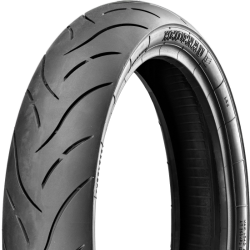
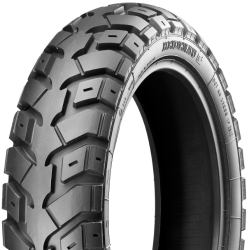
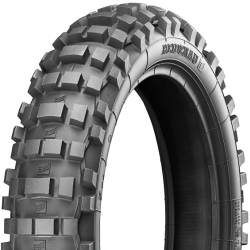
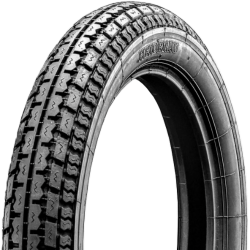
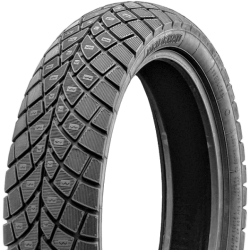
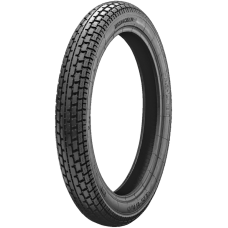
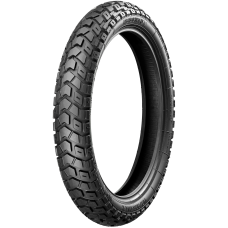
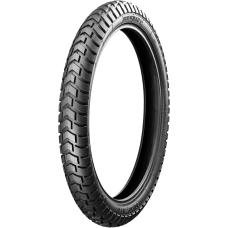
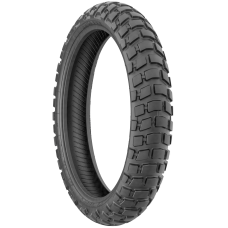
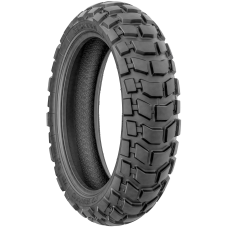
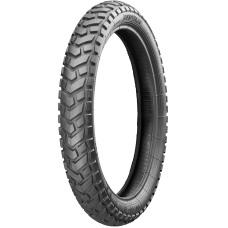
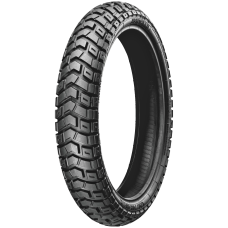
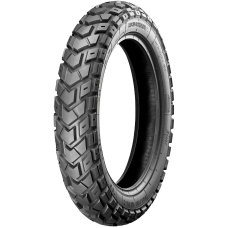
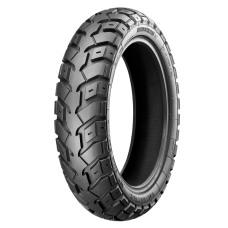
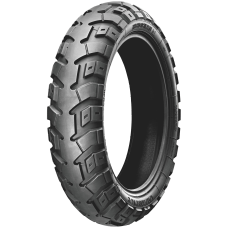
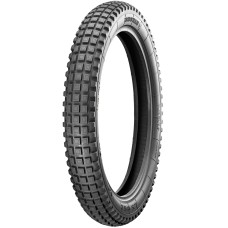
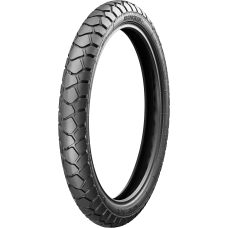
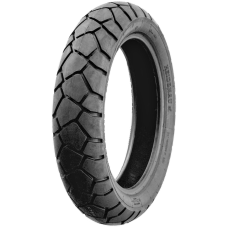
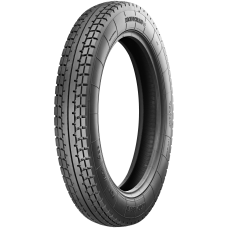
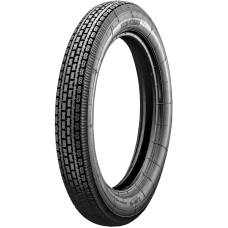
Heidenau motorcycle tyres are built for a specific type of riding rather than as a one-size-fits-all compromise — from town-going classics to heavy off-road machines.
The German factory has been making motorcycle tyres for over 70 years. Every Heidenau tyre is developed for particular conditions: the rubber compound and carcass are matched to the surface and riding style instead of being averaged across everything. A road tyre stays stable at speed; an off-road tyre bites into loose ground — each range is designed for its own conditions rather than trying to do everything equally well.
The catalogue is split into five directions:
- Road tyres — for daily riding and long tarmac routes, with the accent on mileage and stability at speed.
- Touring-enduro tyres — a mixed tread for adventure machines: sure-footed on tarmac and on unpaved roads alike.
- Off-road tyres — a bold block tread for dirt, rocks and rough ground, for lightweight enduro, motocross and larger off-road motorcycles.
- Klassik classic tyres — a tread pattern that echoes historic models of the 1930s–1980s on a modern carcass.
- Winter motorcycle tyres — M+S-marked models with compounds made for cold weather.
Choose the right subcategory by motorcycle type, or set your tyre size in the filter to see what is in stock. Heidenau motorcycle tyres can be ordered with delivery across Kazakhstan.
Heidenau motorcycle tyres — frequently asked questions
If you already know your size, use the catalogue filter. If not, check your motorcycle manufacturer's recommendations first, then pick a model by the type of riding you do.
Riders choose tyres more carefully than car drivers, and for good reason: a motorcycle's contact patch is about the size of a palm, and it decides not just comfort but handling and safety. Below are the questions buyers ask most often.
- Fitment and technical compatibility
- Tyre age and date of manufacture (DOT)
- Running-in, pressure and storage
- Buying, fitting and guarantees
Fitment and technical compatibility
How do you read a motorcycle tyre's markings?
The markings pack size, construction and the permitted load and speed into a single line. Take 180/55 ZR17 73W: 180 is the tread width in mm, 55 is the profile height as a percentage of the width, ZR is a high-speed radial tyre, 17 is the rim diameter in inches, 73 is the load index and W is the speed index.
The most common speed indices on motorcycle tyres:
| Index | Maximum speed |
|---|---|
| P | 150 km/h |
| S | 180 km/h |
| T | 190 km/h |
| H | 210 km/h |
| V | 240 km/h |
| W | 270 km/h |
The ZR marking indicates a tyre rated for over 240 km/h. A speed symbol in brackets — for example (W) — means "above 270 km/h", the marking used on the fastest motorcycles. The Y rating (300 km/h) is very rarely seen on motorcycle tyres. Never go below the load index your motorcycle requires — the figure in the manual is a minimum, not a suggestion.
Can you fit a tyre wider or narrower than standard?
It is best to stay with the size in your motorcycle's manual. A wider tyre on a standard rim changes the profile — it balloons into a rounded shape, so the contact patch in a lean shrinks and cornering suffers. There is also the risk of the tyre fouling the swingarm or chain. Width "for the look" almost always works against handling.
What is the difference between tube-type (TT) and tubeless (TL) tyres, and can you fit a tube in a tubeless tyre?
TT (Tube Type) is a tubed tyre; TL (Tubeless) runs without one. Fit a tube inside a tubeless tyre only where the tyre and wheel manufacturer allow it. On spoked wheels this combination is more common, but it still comes down to the manufacturer's approval.
How does a radial construction differ from a bias-ply one?
Radial tyres (marked R) shed heat better and stay more stable at high speed — they suit road and sports motorcycles. Bias-ply tyres (a dash or the letter B) have a stiffer sidewall and take impacts better. These constructions are more often found on classic, cruiser and off-road models, where sidewall strength and impact resistance matter.
Tyre age and date of manufacture (DOT)
Where do you find a tyre's date of manufacture?
The date is encoded in the last four digits of the DOT code on the sidewall. For example, 3423 means the 34th week of 2023. The DOT code appears on one sidewall only, so don't worry if the other side has none. These digits are easy to check when your order arrives.
What is the shelf life of motorcycle tyres, and how old are the tyres you sell?
Stored correctly, tyres keep their properties for several years, so there is no need to fear a tyre that is a year or two old.
Running-in, pressure and storage
Do new motorcycle tyres need running in, and for how long?
Yes, running in is essential. Over the first 150–200 km a new tyre's surface gradually reaches its working state, so avoid hard acceleration, heavy braking and steep lean angles during that period. Build up your cornering angle step by step so the working surface beds in evenly.
What pressure should you run?
The correct pressure is set by the motorcycle manufacturer, not the tyre maker. Look for the sticker on the swingarm, frame or in the bike's manual. The figures on the sidewall itself (Max Load / Max Pressure) are the tyre's limit at peak load, not an everyday running pressure.
How should you store motorcycle tyres over the off-season?
Tyres need a dry, dark and cool place — roughly +10 to +25 °C. Keep them away from solvents, oils, direct sun and sources of ozone such as electric motors and welding gear. Tyres without wheels are stored upright and turned now and then so they don't deform.
Buying, fitting and guarantees
Can you buy just the rear or just the front tyre?
Yes, tyres are sold individually. The rear usually wears faster than the front, so replacing it on its own is normal practice. If the front is still good, fit a rear of the same maker, range and tread pattern so the bike behaves predictably.